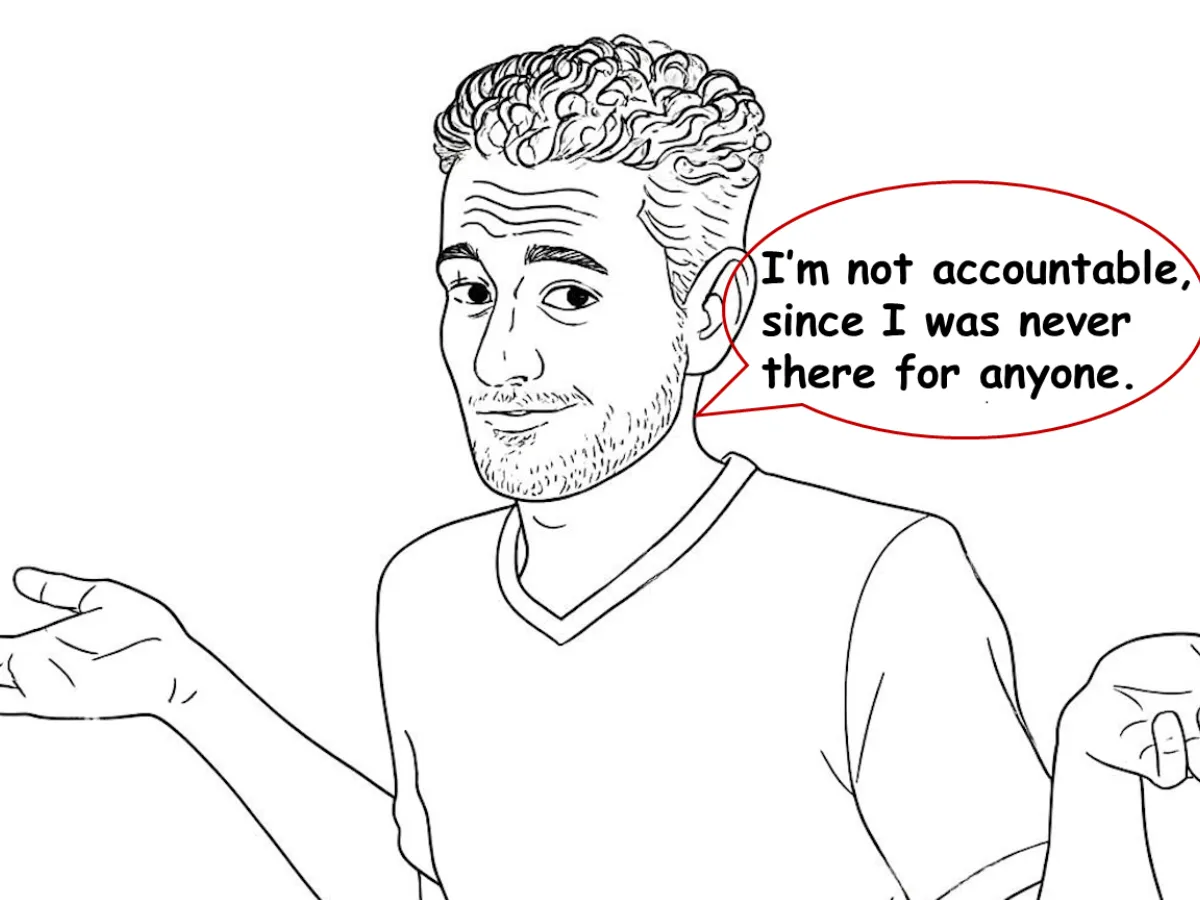
 No accountability
ACCOUNTABILITY
Building Trust Through Responsibility and Emotional Maturity
The Power of Accountability in Relationships: Why Taking Ownership of Your Actions and Impact is the Cornerstone of Conflict Resolution and Lasting Emotional Safety
 thelovemaze.com
What Does It Mean to Be Accountable?
Being accountable in a relationship means taking full responsibility for your words, actions, and impact on your partner. It’s not just about admitting mistakes—it’s about being honest, dependable, and willing to own your part in every situation.
Accountability involves self-awareness, integrity, and emotional maturity.
It is the willingness to say, "I was wrong," or "I could have handled that better," without resorting to defensiveness or shifting the blame.
In a healthy relationship, accountability looks like:
Owning Impact: Admitting when you hurt your partner, even if the action wasn't malicious.
Dependability: Following through consistently on promises and commitments.
Emotional Ownership: Taking responsibility for your own emotions and reactions.
Seeking Repair: Making genuine efforts to fix the harm and prevent recurrence.
Reflect and Learn: Reflecting on feedback without shifting blame.
Accountability is love in action—it’s proof that you value your partner’s trust more than protecting your ego.
Why Building Trust Through Responsibility Is Vital
Accountability is one of the deepest forms of respect. It creates emotional safety and allows trust to flourish. When both partners take responsibility for their behavior, the relationship becomes a partnership built on honesty and growth rather than defensiveness and denial.
Here’s why accountability matters:
Strengthens Trust: Taking responsibility shows transparency and reliability.
Promotes Emotional Safety: Your partner feels secure knowing you will own your mistakes instead of deflecting them.
Reduces Conflict: Accountability transforms blame into collaborative problem-solving—"How do we fix this together?"
Encourages Growth: Self-reflection allows you to learn from actions and evolve emotional maturity.
Deepens Respect: A partner who sincerely admits fault earns more admiration, not less.
Accountability transforms relationships from fragile to resilient. It’s the glue that keeps connection strong, even through challenges.
The Hidden Damage of Lacking Accountability
A lack of accountability can slowly erode even the strongest relationships. When one or both partners chronically avoid responsibility, trust fades, resentment grows, and effective communication collapses.
Consequences of avoiding responsibility:
Blame Cycles: Partners constantly point fingers, blocking all chances of finding real solutions.
Erosion of Trust and Credibility: Repeated avoidance damages reliability and security.
Unresolved Conflict: Issues recycle because neither partner initiates change or repair.
Emotional Distance: The partner seeking resolution feels unheard, invalidated, or dismissed.
Stunted Growth: The entire relationship stagnates because no one takes the initiative to change.
Unresolved Conflict: Issues get recycled instead of resolved, leading to frustration.
Defensiveness and Resentment: Both partners feel under attack or unappreciated.
Without accountability, love turns into a power struggle where being "right" becomes tragically more important than being close.
Behaviors That Reflect Low Emotional Maturity
A lack of accountability often shows up in subtle, defensive habits that protect the ego but harm the relationship.
Common signs of a lack of accountability:
Blaming: Pinning actions on the partner, circumstances, or outside factors.
Minimizing Impact: Denying or downplaying the severity of the harmful behavior.
Deflection: Bringing up the partner’s past mistakes to avoid discussing one's own.
Avoidance: Refusing to apologize sincerely or avoiding serious emotional topics altogether.
Victim Playing: Claiming, "That’s just how I am" or "I can't help it."
Making excuses instead of taking ownership.
Using Humor or Deflection to avoid serious topics.
Refusing Self-reflection or feedback.
These patterns create emotional tension and block healthy communication. Over time, they teach your partner that honesty and vulnerability are not safe or effective.
How to Cultivate Accountability
1. In Yourself - Strengthening Personal Accountability
Accountability starts with self-awareness and the courage to look inward, even when it’s uncomfortable.
Pause and Reflect: When triggered, observe your emotions and their root causes before speaking.
Own Your Part: Clearly take responsibility for your contribution to the conflict, regardless of your partner's actions.
Apologize Sincerely: A real apology focuses on understanding the impact on your partner, not just saying "sorry."
Follow Through: Be dependable; consistency in actions is the bedrock of building trust.
Seek Feedback: Ask your partner how your actions affect them, and listen without defensiveness.
Reflect and repair: When you make a mistake, focus on what you’ll do differently next time.
Being accountable isn’t about being perfect—it’s about being honest, humble, and committed to growth.
2. In Others - Encourage Accountability in Your Partner
You can’t force accountability, but you can inspire it through calm communication and consistent modeling.
Model the Behavior: Show accountability in your own actions and conflict approach first.
Use Non-Accusatory Language: Focus on how you feel ("I feel hurt when this happens") rather than their failure ("You never take responsibility").
Focus on Solutions: Shift the conversation from blame to teamwork—"How can we prevent this next time?"
Acknowledge Effort: Offer positive reinforcement when they own up, even in small steps.
Set Boundaries: Define what behaviors you will and will not accept to protect your emotional well-being.
Mutual accountability strengthens both partners—it builds a foundation of respect where growth feels safe and shared.
Final Thoughts
Being accountable is not about guilt—it’s about growth. It’s choosing truth over pride and connection over control. Relationships thrive when both partners own their actions and take steps to repair, learn, and evolve.
When accountability becomes part of love’s language, trust deepens, communication flows, and forgiveness becomes easier.
Because in the end, love doesn’t demand perfection—just the courage to take responsibility and try again.
